Quantitative Sensory Testing (QST) offers a structured way to measure how the body senses and processes pain. For me, as someone interested in clinical research and pain science, learning about QST opened up a completely new perspective on assessing pain that goes beyond asking people to rate their pain on a scale. Instead, QST protocols use controlled mechanical, thermal, or electrical stimuli to pick up subtle changes in how the body processes pain signals. This approach is now commonly used in clinics and research settings to help diagnose pain disorders or monitor how treatments are working.
Understanding Quantitative Sensory Testing: The Basics
Quantitative Sensory Testing brings objectivity to pain assessment. Instead of relying on patient stories alone, QST provides repeatable, measurable data. The protocols follow a set procedure where specific instruments deliver a stimulus, like heat, cold, or pressure, to the skin, and I record the test subject’s responses. This type of testing can reveal unusual sensitivity or numbness that a routine checkup might miss.
QST protocols are really valuable in conditions like neuropathic pain, fibromyalgia, and diabetic neuropathy. Many experts see these protocols as an important option for tracking disease progression or evaluating the effect of new treatments. A recent review showed that QST is steadily being incorporated into clinical trials and even in everyday practice for pain clinics. The European Federation of Neurological Societies and other organizations have also issued official guidelines outlining how to apply these protocols, which further supports their reliability. Additionally, QST is being adopted as a key diagnostic tool, not only for rare pain conditions but also in routine follow-ups for people already diagnosed with chronic pain syndromes. With the build-up of more data sets from multiple clinics, the accuracy and value of QST is increasing.

Core Concepts and Terminology in QST
Getting comfortable with some QST terms makes following protocols easier and helps avoid confusion. Here are key terms I use in my work, with clear explanations:
- Threshold: This is the minimum level of stimulus needed for the subject to just notice a sensation, like the faintest warmth or the slightest pressure.
- Pain Threshold: This is when the stimulus moves from being merely detectable to actually uncomfortable or painful.
- Pain Tolerance: This describes the highest intensity of stimulus a subject is willing to tolerate before asking for it to stop.
- Dynamic Testing: Some protocols increase or decrease stimulus intensity gradually to expose how the nervous system reacts over time or after repeated exposure.
When applying these terms during testing, I find it easier to keep the procedure consistent and ensure results can be compared across subjects or visits. Sticking to this shared language also helps when communicating findings to healthcare providers, so everyone is on the same page.
Common Protocols and How They Work
Different QST protocols are tailored to test different kinds of sensory fibers. Here’s a rundown of the most common ones I’ve used or seen in clinical studies:
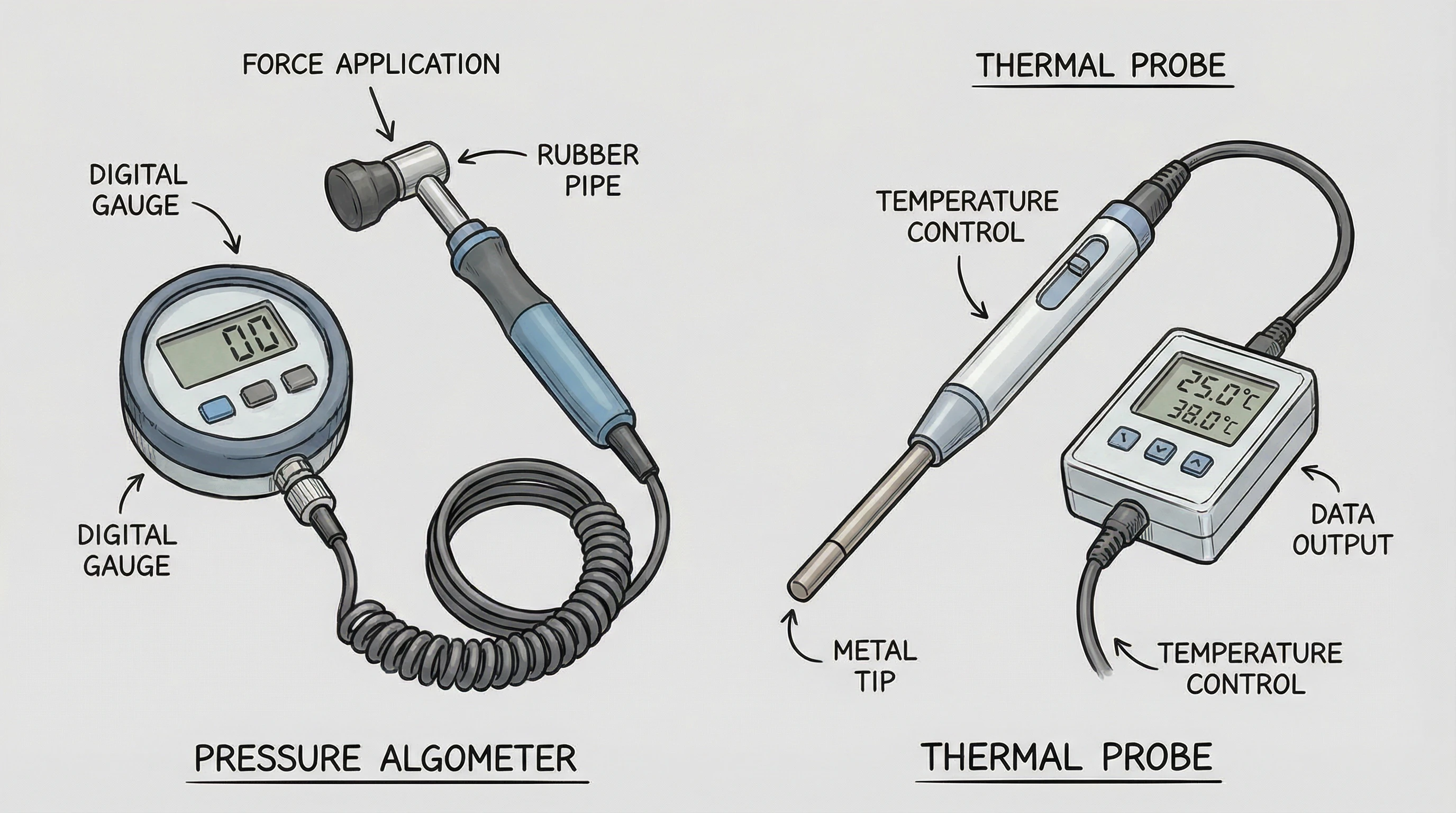
- Thermal Testing: Involves heating or cooling a probe applied to the skin to measure thresholds for warm or cold detection and pain.
- Mechanical Testing: Uses devices like pressure algometers, von Frey filaments, or pinprick stimulators to test sensitivity to touch, pressure, and sharpness.
- Vibration Testing: A tuning fork or vibrometer checks how well a person detects vibration, which is especially helpful for tracking nerve function in diabetes or after nerve injury.
- Electrical Stimulation: Delivers controlled little shocks to the skin to gauge sensory nerve responses.
Standardized QST battery protocols, such as those from the German Research Network on Neuropathic Pain (DFNS), typically combine several of these tests to profile the full range of sensory function. Following the set order established in these protocols is really important, since tests can affect each other. For instance, pain responses may change if cold stimulation is applied after a pain threshold test. Tools like electronic pain diaries may also be paired with QST to give a fuller view of how someone’s pain experience changes from day to day.

How to Prepare for Quantitative Sensory Testing
I always make sure the environment is quiet and at a comfortable temperature because anxiety, noise, or cold can impact results. Subjects need to avoid caffeine, alcohol, and pain medicines for several hours before their test to reduce the chance of misleading findings. I explain the entire process in advance, so participants know exactly what to expect. This open communication helps put people at ease, which can also improve the reliability of the test. For kids or those with cognitive challenges, adding visual aids or a relaxed setup can make a real difference in their experience.
Here’s a basic preparation checklist that guides how I get ready:
- Check all equipment calibration the day before
- Make sure the testing space is free of distractions and kept at room temperature (around 22°C/72°F)
- Offer participants time to ask questions before starting
- Double check health history for any conditions or medications that might affect pain responses
- Keep detailed notes of each step and any unusual reactions, so results can be compared later
Sometimes, participants may feel nervous about the unknown. I always take time to run a practice round, using minimal stimulation to show people what to expect. This helps deflate anxiety and leads to more reliable results. In some tests, ensuring that the area of skin being assessed is free from lotions or creams is also important since such substances could change how stimuli are felt. These extra steps may seem small, but I’ve found they really pay off for data quality.
Challenges and Common Issues When Using QST
Applying QST in real-world settings comes with a few hurdles. Some people get nervous, which can affect their sensitivity to pain during tests. Others might interpret the sensations differently, leading to differences that are not always about physical nerve function but about perception. In my experience, sticking to a consistent routine helps reassure the subject and improve accuracy.
Equipment Errors
Devices sometimes lose calibration, which throws off the entire test. Regular equipment checks help avoid this issue. I always keep a log for when calibration was last done and confirm settings before every session. An overlooked fault in equipment settings can lead to invalid data, which means backtracking over sessions, so it’s worth being thorough up front.
Variability in Results
Day-to-day variations in pain perception are normal. Mood, sleep, and recent activity can all influence QST readings. That’s why when I run studies, I schedule multiple sessions at the same time of day and ask participants about their recent routines or illnesses. Seasonal and hormonal factors—especially in long-term studies—can have an effect as well, so documenting these influences is a good habit for research or clinical follow-ups.
Communication Barriers
Some people have trouble describing sensations or may not fully understand instructions. I use clear, simple language without medical jargon, and I often demonstrate how the test works before starting. Asking open-ended questions about what the subject feels is another technique that helps. For multilingual settings, bringing in an interpreter or using pictograms ensures that assessments are accurate and inclusive.

Applications of QST in Clinical and Research Settings
QST testing is now widely used for more than just diagnosing rare nerve conditions. I’ve seen it used for research into chronic pain conditions like migraines, complex regional pain syndrome, and osteoarthritis. It is also valuable when studying new pain relief treatments, showing if nerves are responding to medications or therapies as expected. Outside pain clinics, neurology and rehabilitation specialists also use QST for monitoring recovery after injuries or surgery, especially when standard nerve conduction tests might miss small changes.
- Diagnosis: QST helps spot early signs of nerve damage, sometimes before symptoms get severe.
- Treatment Monitoring: Repeated QST sessions can track how a patient improves (or not) with a new therapy, offering another layer of evidence than pain scales alone.
- Understanding Mechanisms: Research settings use QST to study how pain pathways change in the body, leading to new insights and better-targeted treatments.
I remember a clinical project where patients with suspected small fiber neuropathy underwent QST and skin biopsies. QST helped identify those with real sensory changes, informing doctors on next steps for care. This approach made me appreciate how these protocols add value not just for diagnosis, but also for tracking progress. Plus, QST data is contributing to larger projects looking for new pain biomarkers, promising wider application for the future.
Frequently Asked Questions
Many beginners and even experienced clinicians have questions about how QST works in practice. Here are a few I hear regularly:
Question: How long does a typical QST session take?
Answer: Usually, a full QST battery can take 30 to 60 minutes, depending on the number of tests included.
Question: Is QST painful or risky?
Answer: QST tests are designed to avoid injury. Some tests can feel briefly uncomfortable but are stopped at any time if requested. Minor, temporary skin irritation can happen but is rare.
Question: Who should perform QST?
Answer: Anyone with proper training can perform QST, but detailed interpretation is usually done by professionals with experience in neurology, pain medicine, or clinical research.
Why Reliable Protocols Matter for Assessing Pain Perception
Over time, I’ve seen that the real impact of QST is in its ability to improve patient care and research outcomes by giving precise and repeatable results. A carefully followed protocol makes comparison across visits and between patients much more meaningful. This structured approach also helps detect changes that could be missed with simple pain scales, especially in conditions where nerve function changes over time. Being able to spot these changes means being able to intervene earlier, which can have direct benefits for a person’s long-term quality of life.
Building experience with QST takes time, but the technique is a key option in the growing toolkit for pain professionals. Whether for diagnosing hard to explain symptoms, evaluating treatments, or making research more robust, reliable QST protocols continue to prove their value in pain assessment. For anyone interested in pain science or working in clinics with complex pain cases, getting comfortable with QST is a smart investment for future practice.